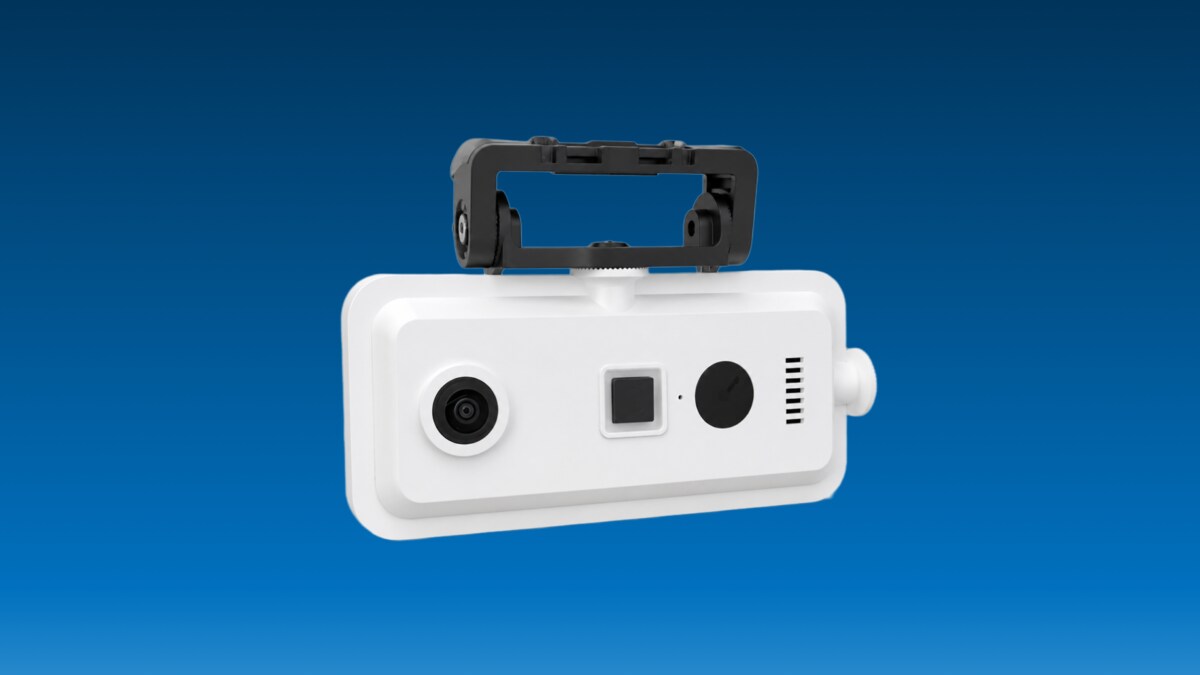
Samsara announced its 360 Camera for operated equipment on November 12. The single-mount camera is designed for equipment such as forklifts, excavators, baggage tugs and aircraft pushback tractors. Read Samsara’s announcement.
The rugged module houses two 190-degree lenses and gives safety teams a way to pan and zoom through recorded footage of the operator, the controls and the surrounding work area. A single mounting point simplifies the hardware layout. The installer still has to find a position that gives the fleet useful footage as the machine moves through its normal work.
What changes when there is no windshield?
Open-cab equipment often lacks the protected mounting locations found inside a road vehicle. Four factors guide the choice of mount and cable route.
- Vibration, repeated impacts and exposure to weather, dust or washdowns.
- Movement of the mast, boom or attachments and any overhead-clearance restrictions.
- Operator entry and exit, as well as the visibility of the operator, seat belt and controls.
- Cable protection around moving or articulated components and a power connection appropriate for the equipment.
On a forklift, the mast, overhead guard or load can block parts of the image. An excavator’s boom and changing position can affect what the camera sees. Ground-support equipment adds its own clearance and environmental constraints. Seeing how the machine is used helps us choose a mounting position and identify what to verify at handoff.
Installation quality determines data quality
Samsara says the camera’s AI can flag camera obstruction, phone use, seat or lap belt use and harsh impacts. Useful footage starts with a secure mount, a protected cable route, reliable power and assignment to the correct equipment in the platform.
For this type of installation, we recommend documenting these details and verifying them at handoff.
- Equipment ID, camera serial number and device assignment in the platform.
- Approved mounting location, secure fasteners and clearance from moving components.
- Power and ground connections, cable routing and abrasion protection.
- Visibility of the operator, controls and work areas the fleet needs to see.
- Successful device communication and a recorded test clip that the fleet can retrieve, pan and zoom.
A view that looks clear when the equipment is parked can change with the mast raised or an attachment in a different position. At handoff, we recommend checking recorded footage with the equipment in the positions it will encounter during normal operation.
Deploying cameras across equipment types
Safety Net Installations supports GPS, telematics, dash camera and advanced 360-degree camera deployments across all 50 states. Our field process combines equipment-specific preparation, trained technicians, serial-number tracking, installation documentation and real-time quality-control review.
Planning a rollout for forklifts, excavators or ground-support equipment? Talk with Safety Net Installations about your equipment types, operating conditions and the views your safety team needs to verify.