

Modern companies that own and manage vehicles and mobile assets can’t do without cutting-edge technologies in their workflows. Businesses can streamline and facilitate their fleet management pipeline by leveraging the benefits of GPS fleet tracking, such as real-time fleet visibility, route optimization, driver safety monitoring, theft prevention, ELD compliance, and more. So, let’s find out more about GPS fleet tracking software benefits and how fleet GPS tracking systems installation can be a game-changer for your organization.
Ready to Get Started?
Book a consultation with our experts and discover how we can help you.
What Is GPS Fleet Tracking?
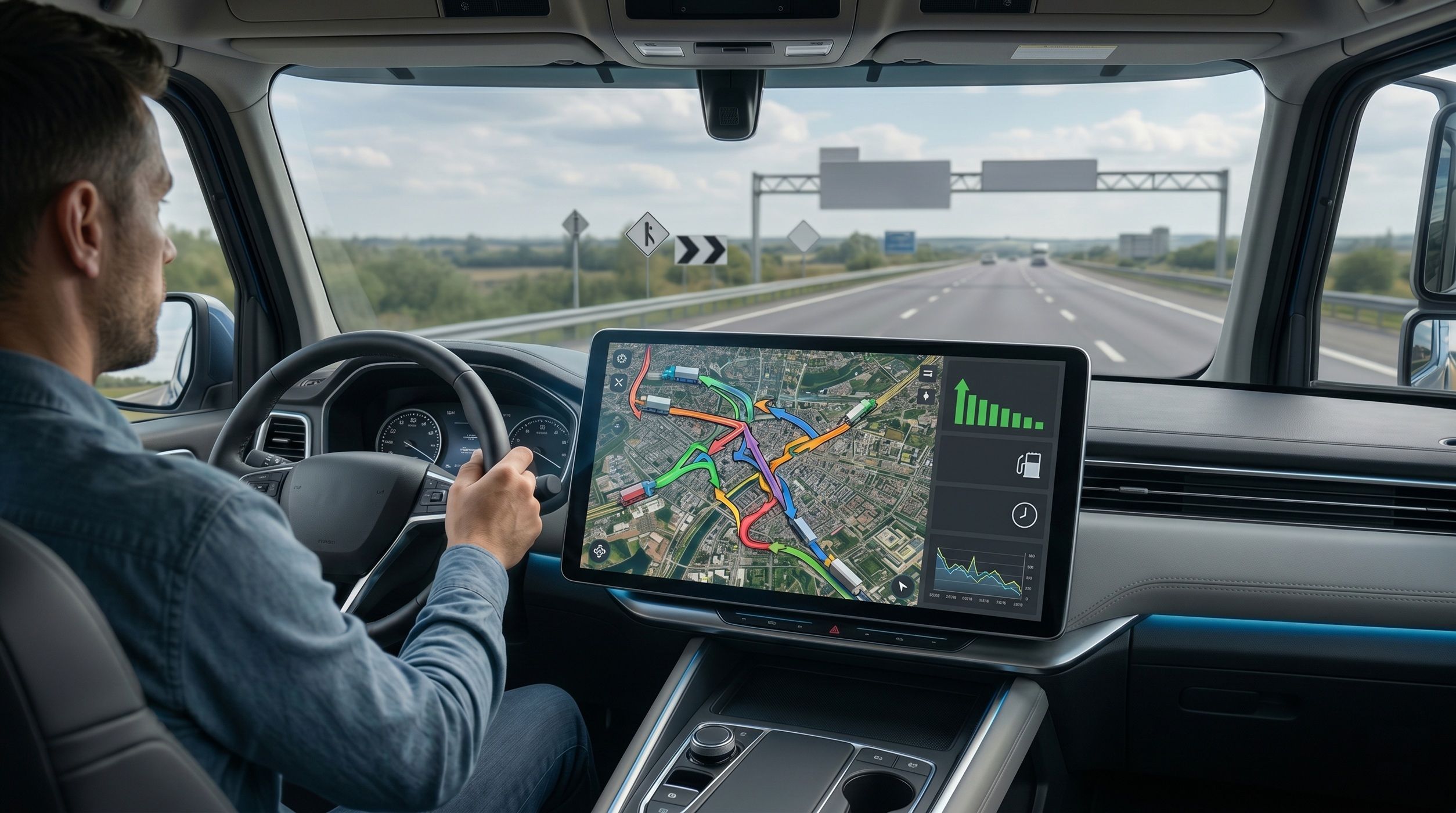
The Global Positioning System, or GPS, is a satellite-powered navigation network that allows for real-time tracking of any vehicle with specialized equipment installed on it. The elements of this system include satellites orbiting the Earth, ground stations worldwide, and automobile-based telematics devices fueled by dedicated software.
How does GPS fleet tracking work? The satellites (there must be at least 24 of them operating simultaneously) broadcast signals indicating their positions and the times at which they were sent. Control stations exercise continuous monitoring of the satellites to ensure their accurate operation. Receivers installed in vehicles read signals from satellites, factor in time delays, and determine the automobile’s current location, informing drivers about it.
But it’s not only drivers. If the receiver devices on company-owned vehicles are linked to the enterprise-wide fleet utilization ecosystem, their data is directed to the manager's dashboard. What information can they see there?
- Place and movement data (real-time vehicle location, route history, geofencing alerts, mileage tracking, etc.).
- Driver behavior (speed, idle time, seatbelt usage, and more).
- Fuel consumption, including fuel level, refueling, miles per gallon, and so on.
- Engine health parameters, such as battery voltage, odometer readings, maintenance alerts, and others.
Evidently, such a wealth of data results in weighty benefits of fleet tracking for fleet managers in the USA or any other country, for that matter.
What Are the Key Benefits of GPS Fleet Tracking for Fleet Managers?
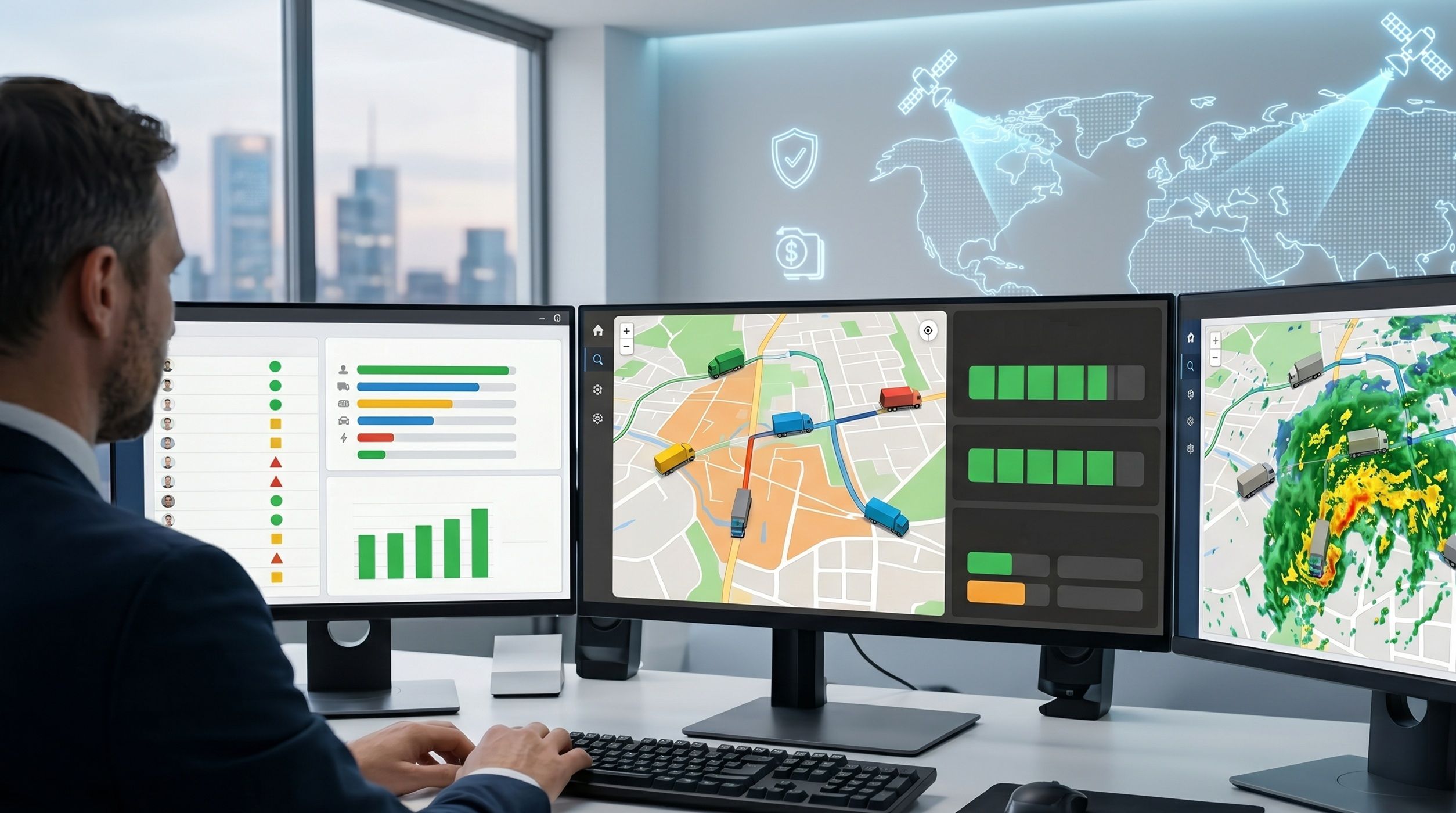
The benefits of fleet tracking go far beyond location monitoring, giving fleet managers better control over operations, drivers, and overall costs.
Real-Time Visibility and Route Optimization
Dispatchers can see where the vehicle is at any time and receive continuous updates when the asset moves inside or outside the predetermined boundaries (geofences).
Having this data at their fingertips, along with monitoring live traffic flow, weather conditions, road closures, and potential detours, managers can dramatically boost dispatch efficiency by dynamically rerouting vehicles to bypass obstacles and avoid delays.
Fuel Cost Reduction and Idle Time Control
If fleet routes are optimized and idle time is kept to a minimum, companies can achieve significant fuel savings (up to 30%). Idling reduction offers one more perk: reduced engine wear, leading to an extended vehicle lifespan.
Driver Safety and Behavior Monitoring
Telematics systems are honed to detect basic driver behaviors that may hamper or even endanger the mission, such as:
- Speeding
- Harsh driving incidents (abrupt braking, rapid acceleration, sharp cornering, etc.)
- Route adherence
- Seatbelt usage
If any improper behavior is spotted, alerts are immediately sent to managers who step in with remedial or corrective measures.
Unauthorized Use Alerts and Theft Prevention
Thanks to geofencing, organizations can exercise asset tracking outside scheduled routes and working hours. And if a vehicle was stolen, the same feature helps identify its location and speeds up its recovery.
Ready to Get Started?
Book a consultation with our experts and discover how we can help you.
Simplified Compliance and ELD Reporting
Department of Transportation (DOT) regulations and electronic logging device (ELD) compliance are a tall order for many logistics companies, which have to invest significant time and effort in this routine. By integrating GPS tracking solutions with ELDs, they can automate Hours of Service (HOS) logs, streamlining adherence to legal norms. Moreover, tracking systems provide comprehensive, audit-ready records regarding distance driven and fuel purchased in each state, which is vital for IFTA reporting.
Thus, GPS tracking systems enable fleet managers to automate three mission-critical compliance tasks:
- Keeping HOS logs
- Generating IFTA reports
- Creating maintenance schedules
In addition to the above-mentioned advantages of the GPS vehicle tracking system, it is a prime cost-saver.
How GPS Tracking Reduces Fleet Operating Costs
There are three major areas where OPEX minimization is the most significant.
- Insurance discounts. GPS tracking promotes safer driving behavior and minimizes vehicle theft risks, leading to lower insurance premiums for organizations.
- Decreased maintenance expenditures. Proactive, data-driven alerts and live diagnostics allow enterprises to embrace much more cost-effective preventive maintenance rather than resort to reactive repairs that usually cost an arm and a leg.
- Less paperwork and admin time. Companies save a pretty penny by replacing manual, paper-heavy processes with automated, digitized data collection and report generation capabilities.
On balance, GPS tracking makes a great difference in the fleet management routine of any organization.
| Parameters | Without GPS tracking | With GPS tracking |
|---|---|---|
| Fuel costs | High because of inefficiency, idling, speeding, etc. | Up to 30% lower thanks to route optimization and driver behavior monitoring |
| Insurance | Higher, flat rates | Lower premiums |
| Compliance | Manual and error-prone | Automated and accurate |
| Theft risk | High, with small recovery chances | Low due to real-time tracking and alerts |
| Admin time | High, with manual effort dominating | Low thanks to automated workflows |
Is GPS Fleet Tracking Worth It?

The main argument against onboarding GPS software is its high upfront cost. Naturally, as with any other high-tech product, a robust, enterprise-grade GPS solution does not come cheap. However, by investing in a high-quality telematics product, you pave the way for long-term savings, since your fuel consumption, insurance expenditures, and labor costs will be dramatically reduced down the line. And you don’t have to wait an age to see your ROI soar, as most companies end up in the black after just a year of leveraging fleet-tracking benefits.
Still, only a top-notch product of this kind can guarantee that you will reap benefits aplenty. Safety Net Installations offers high-end GPS solutions that cover all the needs of a logistics or transportation company in telematics products, provides their installation, and organizes training for your personnel to let them make the most of the technology they onboard.
Key Takeaways
The Global Positioning System relies on a network of satellites to help drivers determine their location on the ground. When leveraged by logistics and transportation companies for fleet tracking, GPS enables them to optimize routing, monitor driver behavior and safety, cut down on fuel expenditures, prevent theft and unauthorized use of assets, and streamline compliance with regulations.
Contact Safety Net Installations to equip your enterprise vehicles with first-rate GPS devices connected to a unified ecosystem that will take your fleet management pipeline to a new level.